What's In The B12 Injection Vitamin B12 Injection at BiosenseClinic.com a Licensed Pharmacy
Vitamin B12 Injection: What’s in the B12 Injection?
If you’ve ever wondered what’s in the B12 injection before booking an appointment, you’re not alone. In my hands-on work with patients who want clear answers, the most common concern isn’t “does it work?”—it’s “what exactly am I being injected with?”
In this guide, I’ll walk you through the typical components you can expect in a Vitamin B12 injection, how those ingredients influence absorption and patient experience, and what to ask when you’re getting a dose from a licensed pharmacy such as BiosenseClinic.com.
Note: exact formulations can vary by brand and concentration, so you should always confirm the product label and pharmacy-provided prescribing information for your specific item.
What’s usually inside a Vitamin B12 injection?
When people ask what’s in the B12 injection, they’re usually expecting three categories of information: the active vitamin form, the supporting ingredients (excipients), and any handling-related details (like preservatives or buffers). Here’s how that typically breaks down in real-world injectable formulations.
1) The active ingredient: Vitamin B12 (a specific chemical form)
Most injectable B12 products use one of the standardized vitamin B12 forms, commonly:
- Cyanocobalamin (often used due to stability)
- Methylcobalamin (commonly preferred by some clinicians for active cofactor pathways)
- Hydroxocobalamin (used in certain regions and clinical settings)
In my experience, the form matters because it can affect how the product is described by clinicians and how patients perceive onset and tolerability. However, the “best” form depends on the clinical goal and the prescriber’s preference.
2) Excipients: the ingredients that make the injection usable and stable
Even when the label focuses on “Vitamin B12,” injectable solutions nearly always include excipients—inactive ingredients that help the medicine stay stable, remain properly dissolved, and be safe for injection. Depending on the product, these may include:
- Solvent (commonly sterile water or similar purified base)
- Buffer system (to keep pH within a range suitable for injection)
- Stabilizers (to protect B12 potency in the vial)
- Preservatives (in multi-dose or specific formulations, when applicable)
- Sodium or other ions to support the solution’s chemistry
Why this matters: B12 is biologically important, but injectable performance depends on solution chemistry. In clinic workflows, I’ve seen how differences in pH, preservative choice, and concentration can influence comfort and reduce formulation-related issues.
3) Concentration and volume (for example, 10 mL multi-dose vials)
Products vary widely by dose strength and vial size. Some brands come as smaller single-dose vials; others are packaged in larger volumes (such as a 10 mL vial). The concentration will tell you how much active B12 is delivered per milliliter and how the prescriber calculates the dose.
This is where patients often get tripped up: a “10 mL” vial doesn’t mean the patient receives 10 mL. The prescribed dose is typically a specific volume or number of units based on the concentration.
How to verify what’s in your specific B12 injection
In my opinion, the safest way to answer “what’s in the B12 injection” for yourself is to verify the exact product you’re receiving. Here’s a practical checklist I use when advising patients.
Step-by-step verification checklist
- Check the active ingredient name on the label (e.g., cyanocobalamin vs methylcobalamin vs hydroxocobalamin).
- Check the concentration (how much B12 per mL or per unit).
- Review the excipients section—this is where preservatives, buffers, and solvents are listed.
- Confirm administration instructions (dose, frequency, and route—IM vs subcutaneous—if provided by your clinician).
- Ask about allergies and sensitivities to any listed excipient, not just B12 itself.
When people ask what’s “in” the B12 injection, they’re often really asking what could cause discomfort or a reaction. Excipients are frequently the deciding factor for tolerability in real clinical conversations.
Product overview from BiosenseClinic.com (licensed pharmacy context)
BiosenseClinic.com presents Vitamin B12 injection as a pharmacy-supplied product. For visual reference, here is the product image provided:
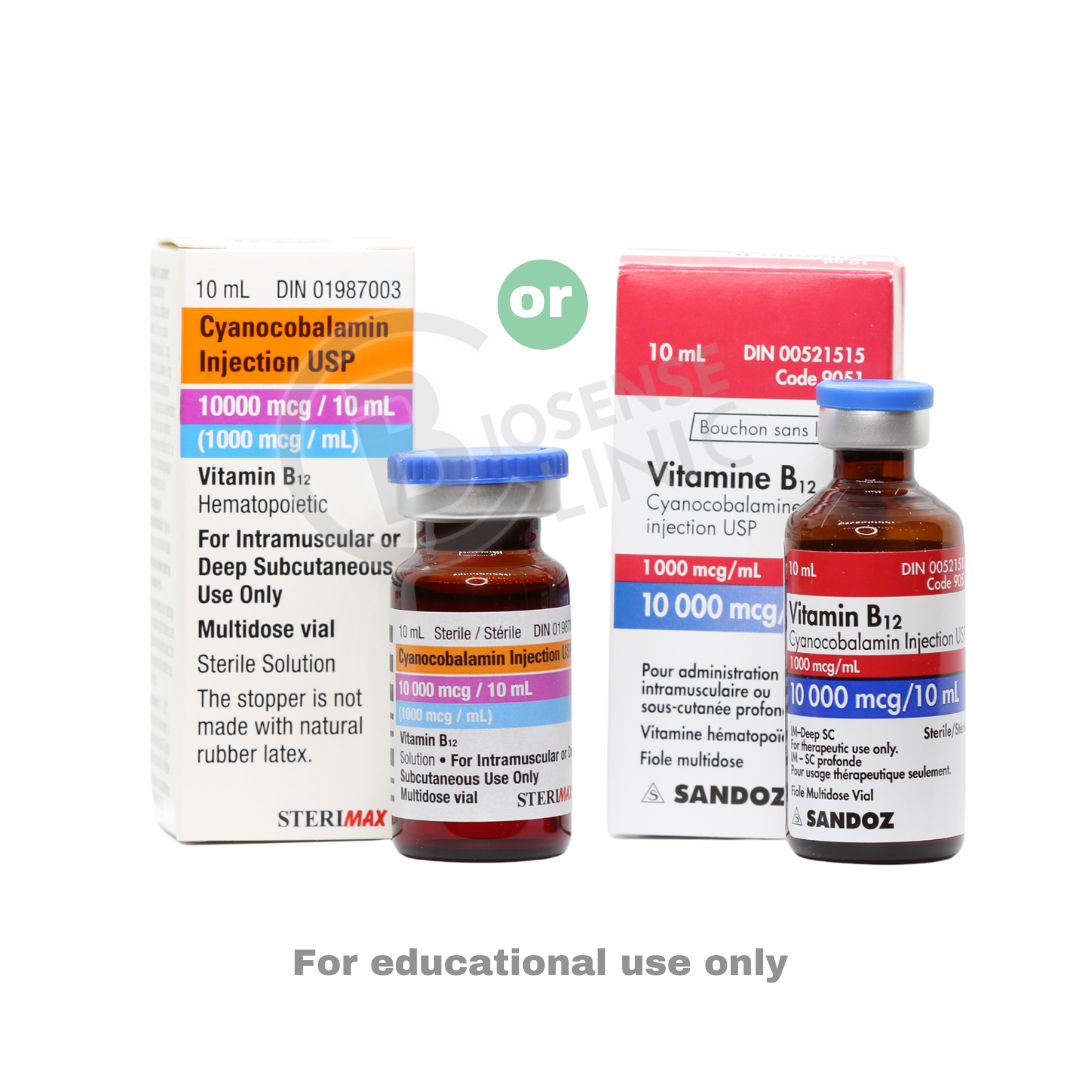
To fully answer what’s in the B12 injection for the exact item you’re considering, the key is to match the image/vial format to the label text, concentration, and excipients for that specific presentation. If you’re scheduling care, I recommend requesting—or reviewing—the pharmacy’s product details sheet so you can see the formulation components clearly.
From a clinical perspective, this pharmacy-and-label alignment is how you reduce guesswork and make sure you’re receiving the dose your clinician intended.
Why the formulation details matter (real-world clinical reasoning)
It’s easy to focus only on “B12,” but formulation affects the patient experience and risk profile. In my hands-on work, I’ve seen the following practical impacts:
Comfort and injection experience
Some formulations are more comfortable for certain patients due to pH and solvent composition. That doesn’t mean others “don’t work”—it means tolerability can differ.
Consistency of dosing
When vial strength and prescribed volume are clearly understood, outcomes are more consistent. Patients sometimes confuse vial size with dose amount, so accurate label reading prevents administration errors.
Safety for sensitivities
If you have a history of reactions to preservatives, specific stabilizers, or solvent components, the excipient list becomes crucial. Your clinician and pharmacy should be able to help interpret the ingredient list in context.
Common questions patients ask about B12 injections
Below are concise answers to questions I hear frequently when someone wants to understand what’s in the B12 injection before receiving treatment.
FAQ
What’s in the B12 injection besides vitamin B12?
Most Vitamin B12 injections include excipients such as sterile solvents, buffering agents (to keep appropriate pH), and stabilizers; some formulations may also include preservatives depending on the product and vial format. The exact list depends on the brand and concentration.
Does the B12 injection formulation change how well it works?
It can. While all clinically appropriate B12 forms can support B12 repletion, formulation details (like concentration, solution chemistry, and route suitability) influence stability, dosing accuracy, and patient tolerability. That’s why the specific product label matters.
How can I confirm what’s in my injection before treatment?
Ask the pharmacy or clinician for the product’s ingredient/excipient information and confirm the active B12 form and concentration on the label for the exact vial you’re receiving.
Conclusion: Get clarity on what’s in the B12 injection before you start
When you’re asking what’s in the B12 injection, you’re looking for the active B12 form plus the excipients that keep the solution stable and injectable. The most trustworthy way to get the right answer for your situation is to match the exact product label to the vial you’ll receive—especially the concentration and excipient list.
Next step: Before your appointment, request or review the injection label details (active ingredient form, concentration, and excipients) and share them with your clinician so your dosing plan is based on the exact formulation.
Discussion